Coming Out (Again and Again): Part One
Keep 'Em Guessing
I was 14 the first time I came out of the closet. I had met a girl in my high school through MySpace (this is a period piece), and we started connecting via MSN Messenger (guess my age) before meeting in person. She appeared more masculine-presenting and her pronouns on MySpace at the time were “he/him,” but after speaking for some time I began to suspect this was more of a play with gender than her actual pronouns. I didn’t initially know for sure if she was a girl or a boy, and at the time I didn’t understand how vast the oceans of gender identity could span, so I didn’t consider any other options.
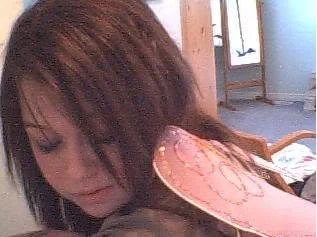
MySpace Princess (2005): Shot using family computer webcam in the artist’s parents’ bedroom
I told some of my friends that I was crushing on this “boy” at our high school who I had been speaking with online. It wasn’t uncommon to connect with other local youths on MySpace, but as a new high school student this was a particularly dreamy and giggly proposition. We all speculated, would I finally meet him in the halls that day? Had I spoken to him the night before? Did we have any idea where we might run into each other? Cell phones were still a new norm, and texts were typed by painstakingly pressing the number keys multiple times per letter. Despite our best efforts, we weren’t in constant connection with our peers the way we one day would be.
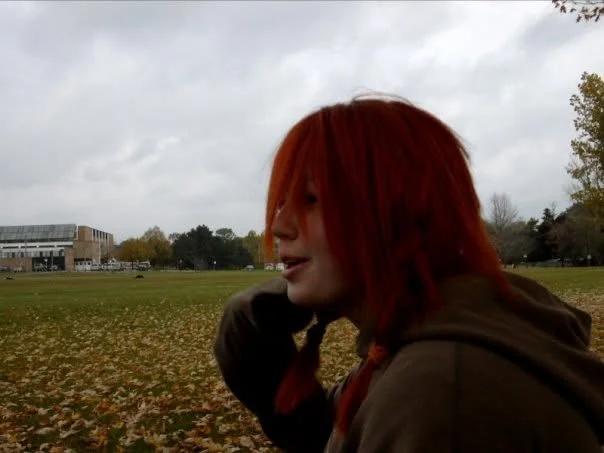
Okay she’s queer, but does she have eyes??
Finally, we arranged to meet in the schoolyard at lunch. A literal schoolyard crush, my stomach spun in circles as I walked toward her and her group of friends. I shyly sat down and beamed. She smiled at me with striking eyes framed by dark lashes, dressed baggy in black. I once again suspected she was a girl, but I didn’t yet ask. How do you broach such a question? Did I even care? Her friends were kind, weird, and warm, and I felt comfortable immediately.
After school that day I ran to the family computer, hoping that the barrier of a screen would allow me to convey my vulnerability in ways I couldn’t possibly in person. I asked if she was a girl, and she said she was. Did it impact how I felt about her? I took a beat to think about the swirling in my stomach, my racing thoughts, and the flush I had felt creeping up my cheeks when I looked at her that afternoon. No, I decided. It obviously made no difference to me.
From there we went all in, spending as much time together as possible, smooching, playing Dance Dance Revolution after school, chatting on MSN for hours. Most of my friends were only seeing her from afar and still referred to her as a “him.” My parents knew I was spending time with a person, but I continued to refer to her as “him” to them as well. If she could do it, why couldn’t I?

At least one eye confirmed by rare flip phone photo taken in high school cafeteria.
I don’t know what I was expecting, but this could obviously only last so long. Maybe I was hoping I would figure out what it meant to me before I was put in the position to explain it to others, but that didn’t happen. As I began to integrate her into my other social groups, my classmates asked me the same questions. “Anna, are you dating a girl?”
I confirmed that I was, but my fear of rejection and my apparent abnormality drew me away from many of these more casual relationships after these disclosures. I began spending more time with my girlfriend and less time with these friends, feeling raw and othered despite no overt ill will from my peers.
One day, my mom came to pick me up from my girlfriend’s house and they finally met in person for the first time. At some point in the car, my mom asked, “Anna, are you dating a girl?”
My body felt like it had been flipped inside out, and I confirmed, “Yes.”
Gilmore Girls, but Queer and Canadian
With that, my mom veered the car and took me to Tim Hortons, where all monumental Canadian conversations are mandated to take place. Bits and pieces of that conversation have stuck with me. My mom had always taught me to support human rights, and gay rights were no different, but she was very surprised. I had given no indication that I was actively interested in girls or dating one.
She asked me what this meant for my sexuality, and for my future. I told her I didn’t know yet. The exposure of my first serious relationship was happening before I had determined or defined anything within myself. Unfortunately, she also asked, “What about kids?!”
This was a question I was not prepared for. At 14, I was a long way away from knowing if I even wanted kids or what my future might look like. Obviously, we are all aware that many queer couples have children, but I can only guess that my mom was possibly reconfiguring the future she had always imagined for me on the spot. (With irony, I am now partnered with a man, and we do not plan to have children – my mom is the proudest grandparent of our beautiful dog Darla.)
The enormity of the moment and this new truth weighed heavily on me. My mom and I have always been extraordinarily close, and I feared bringing this new change into our dynamic. The conversation was ultimately neutral bordering on positive, but the sense of aberrancy clung to me.
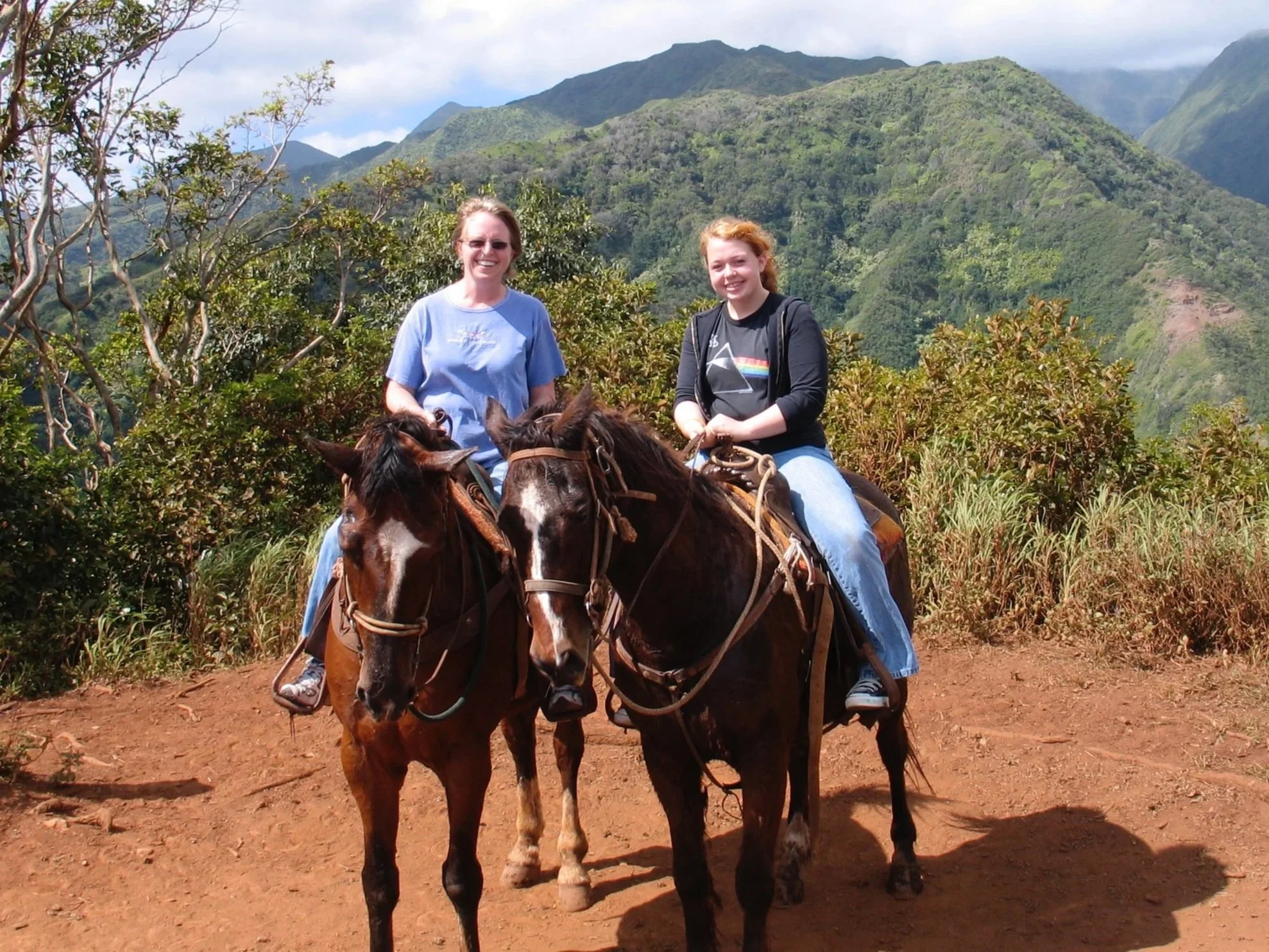
My wonderful mom and her babygoth daughter, dressed appropriately for the Hawaiian heat in 2004.
In a family that did not often speak about sex or romantic relationships, I felt freakish, despite my parents’ progressive leanings. The next morning at school, I tried to explain to a friend that I felt completely naked and exposed for the world to judge now that this piece of myself had been almost fully revealed. She didn’t understand why I would feel that way, given my mom’s general support.
Young Love Ain’t Easy
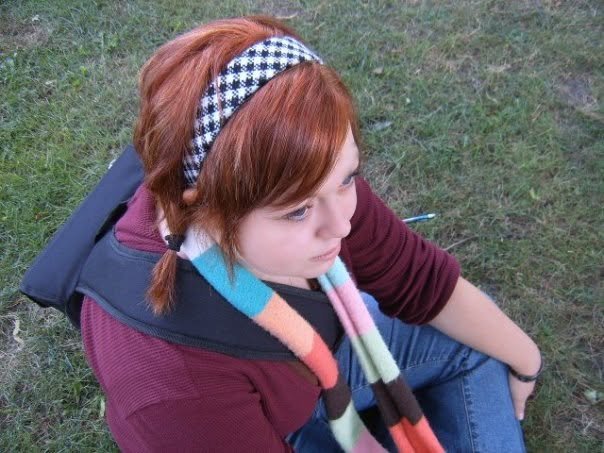
Two eyes confirmed in the schoolyard.
Despite this swirl of inner turmoil and an incredible dedication to teen angst, my relationship continued. I fell in love for the first time, in the all-consuming way that teens do. We wrote each other hand-written love letters and skipped classes to lay outside together. My girlfriend and I watched newly released queer films like Brokeback Mountain and Imagine Me & You, each of which left an indelible lasting impression on me. My mom and stepdad made concrete attempts to support me, including bringing my girlfriend and I for a summer day trip to Toronto.
At one point, we were caught smooching during lunch at our high school when a supervising teacher told us to go to the principal’s office. We were informed that we couldn’t kiss in the halls, but they had walked past other (straight) kissing couples to nab us. My girlfriend’s mother later brought us in for a meeting with the principal to raise a fuss about why we had been singled out as the only queer couple. At that time, I felt ashamed to be spotlighting our intimacy and causing trouble. I didn’t tell my mom about the incident until much later.
Well into the relationship, I went to visit my dad and his family in Alberta over March break. That home was not a comfortable place for me, so I wasn’t yet ready to come out. I felt torn in two, knowing that I had a love several provinces away that I wouldn’t disclose there.
I shared this distress with my girlfriend over MSN, and she told me that if I was so uncomfortable, maybe we shouldn’t be together. I was devastated, unsure of what wrong move I had made. She was two years older but had obviously come out at one point – had she never experienced any of these vulnerabilities? Or was she too far past that stage of her life? While I blew out the candles on my 15th birthday cake that evening, I felt nauseous and dissociated. The sweet taste of frosting did little to revive my appetite.
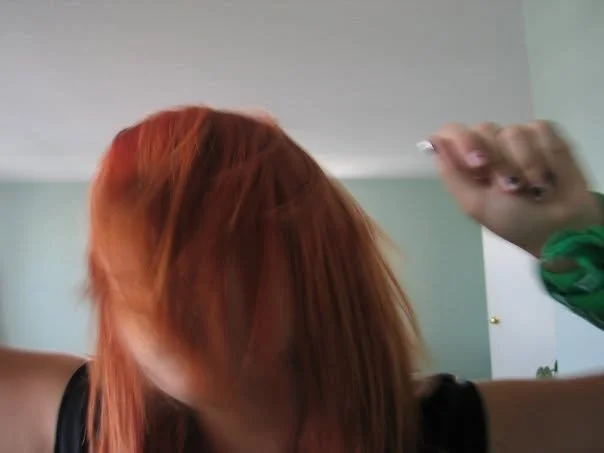
Regretfully, some other things are definitely a phase though. Now I headbang off-camera, in the privacy of my car like god intended.
I returned home to Ontario and our relationship did continue, but I did not feel secure or stable. I decided to come out in a written letter to my dad that I mailed across the country. I was always more comfortable expressing myself in writing. The next time I spoke to him he told me he wasn’t sure why I had felt the need to write all of that in a letter. My stepmom later commented that all teens thought they were bisexual those days, and that it would just be a phase.
After nearly a year of dating, our relationship did come to an end, as it was always fated to. That particular relationship was not good for me, but hindsight comes 20 years later (or whatever they say). It taught me some of my first lessons about love and loss. The ending was messy and left a gaping hole in my heart for some time. Future me looked back on the experience and realized I did not have to be so afraid of such a loss. Life carries on.
Who’s Coming Out, Anyway?
I had almost no choice but to be out as bisexual for the rest of my high school career. Not everyone would have known, but my hometown is not large and social circles overlapped and echoed across high schools. I moved to a new high school midway through and found myself in another progressive group of friends, including other queer people.
During that time, one of my dearest friends asked me what type of girls I was interested in. I had not given my sexuality close attention, had not considered what it meant to me other than when I was forced to confront it (for example, when I was fully dating a girl). I stumbled: “Angelina Jolie?”
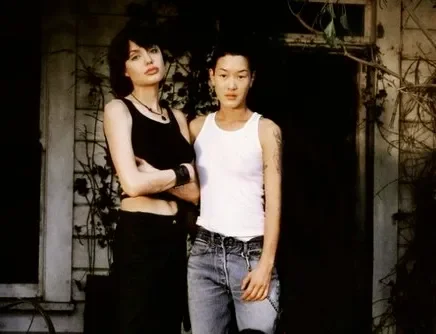
I mean, I wasn’t WRONG… just basic.
That seemed to satisfy her curiosity. I wasn’t wrong that she was attractive, but it was a simple and unexamined response. I had chosen one of the most famous women in the world, known to be bisexual, known as an all-time beauty, a striking bombshell. I wasn’t blind.
I had more romantic fun in my teens but didn’t date anyone seriously. Then, I moved to Toronto for university. Several of my friends did the same but I quickly became entrenched with my new housemates at the dorms. They assumed I was straight; I didn’t correct them. We talked about men; I was interested in men.
Schrödinger’s Bisexual
In January of my first year of university, I met my partner Max, who I am still with over 16 years later. I was new to adulthood, new to Toronto, and having fun – I was not planning to jump into a serious relationship. Max and I clicked immediately. He was candid and unconventional, smart and fun and insane in the best ways. We fell into step with one another immediately and grew up together as adults.
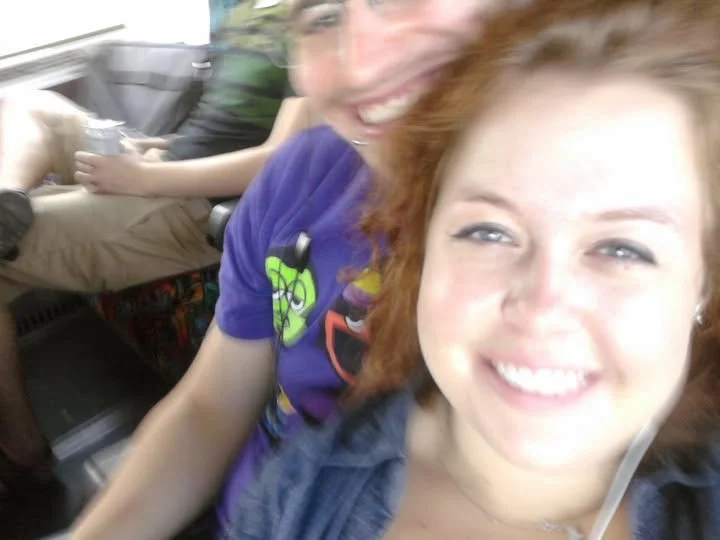
Classic sexual identity for a young bisexual - whoever you’re dating at the time.
Life went on and our close friends evolved. I maintained a few of my long-term hometown friendships closely and others more sporadically, and we made new friends who became our closest circles. I defaulted as straight; almost everyone I met after the age of 19 knew me as dating Max, and no one questioned otherwise. I never clarified. Even in situations with other queer people, I largely kept my sexuality to myself. I didn’t feel I had any right to take up space, and I left that part of my identity largely unexamined. It’s wild how we can keep parts of ourselves dormant in the shadows for so long. I never spoke about it with my family; my sexuality was simply “Dating Max.”
Nearly ten years after our relationship began, something in me became deeply unsettled. From my experience, when life begins to take shape, the shadows tap you on the shoulder to remind you that they still follow your every move. Max and I had moved to my hometown, and my career had begun to progress. He had always known I identified as bisexual, but it wasn’t something I much spoke about. At some point I felt deep in the pit of my stomach that I was not living authentically. I was extremely progressive and vocally in support of 2SLGBTQIA+ and other marginalized communities, and yet I had not openly owned my actual identity and romantic history.
I spoke with Max, and I spoke with my oldest friend Jennie. They both said something along the lines of, “Yeah, you’re queer… duh. We’ve known it all along. Do what you want to do but you can’t hide from it. Would love for you to embrace it.”
For My Final Trick… Let’s Do It Again!
I had already come out fifteen years prior, but I decided I would stop hiding. I started posting casually about being queer in my Instagram stories. I mentioned offhand to my largest group of friends that I was bisexual. One night, Max accidentally did the job before me when he mentioned my teenage girlfriend to one of my closest friends over dinner.
Each time I brought my shadow to the light I felt raw and exposed. I could feel my body retaliating, my guts screaming at me, “No, this isn’t safe! You must be palatable to be loved!” Everything in me feared so deeply how everyone I loved might see me differently. With each conversation, with each Instagram story, my head floated to the high heavens as though to disconnect me completely from the physical form that contained my roiling stomach and my staccato heartbeat.
Unsurprising to the logical side of my brain, the response was very muted. This wasn’t a big reveal but a slow unraveling. My friends were supportive, many surprised because they hadn’t known but otherwise unruffled. As I continuing making new friends over the last few years, I maintained this model of owning my identity. I didn’t hide stories about my past. When sexuality came out, I mentioned off hand that I was queer. Most new friends of mine have now never known any different unless they just didn’t notice.
While the social impact has been minimal, this small act of coming out over and over again started to move something within me. Each time I stayed true to myself, I was holding a mirror up. I started to consider how my queerness shaped my worldview, and I reconsidered what I knew about attraction.
Some of the crushes of my youth had been infatuation or a desperation to be desired. Some of them had been admiration. And I saw that some of my younger feelings towards girls had been attraction and desire. There is often a famously thin line in queer communities between whether you want to be someone or be with them. It turns out I would have sometimes loved to have been with some of the girls I thought were so incredible, in media and even in real life.
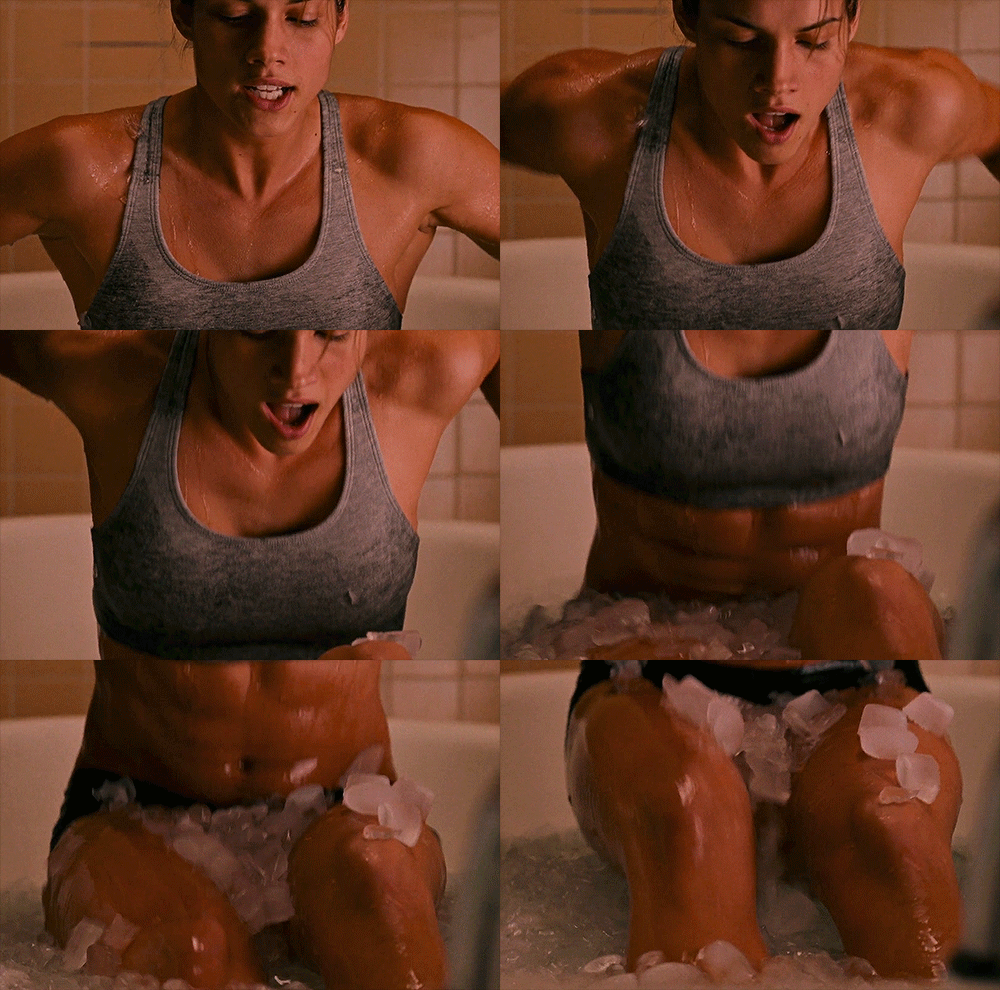


These are [some of my formative] ladies.
You cannot know yourself in the shadows, grasping around for something to hold onto. I had to reveal myself over and over in small and often uncomfortable ways to see my life with more clarity. Sometimes it takes decades to learn there is no workaround (rude).
Think this is enough coming out for one lifetime? Think again - more to come in Part 2! Thank you for reading, and subscribe to my Substack if you’d like to stay in the loop.